Massachusetts Window Tint Law Calculator
Will your tint pass a Massachusetts inspection or a roadside meter check? Massachusetts allows window film down to 35% visible light transmission (VLT) on the side and rear windows. A tint meter reads the film and the factory glass together, though, so the number on the box is not the number an inspector sees. Use this free calculator to see your real reading before you tint.
Check your tint
Pick your factory glass and the film shade for each window. Results update instantly.
Estimates only. Factory glass varies by vehicle, so ask us to meter your windows before we tint. This is not legal advice.
(function(){var Z=[[‘fs’,’Front side windows’],[‘rs’,’Rear side windows’],[‘rw’,’Rear window’]];function el(i){return document.getElementById(i)}function calc(){var out=”,mir=el(‘mmdc-mir’).checked;Z.forEach(function(z){var g=+el(‘g’+z[0]).value,f=+el(‘f’+z[0]).value,net=Math.round(g*f/100),c,t;if(f===100){c=’ok’;t=’No aftermarket film. Factory glass is legal as delivered (about ‘+g+’% VLT).’}else if(f=35){c=’ok’;t=’Legal. ‘+f+’% film on this glass should meter about ‘+net+’%, above the 35% line.’}else{c=’warn’;t=’Film meets the 35% rule, but the finished window would meter about ‘+net+’%. Some inspectors and officers go by the meter reading. A 50% ceramic film reads about ‘+Math.round(g*0.5)+’% here and still blocks heat.’}if(z[0]===’rw’){if(f\x3cstrong>’+z[1]+’:\x3c/strong> ‘+t+’\x3c/div>’});el(‘mmdc-res’).innerHTML=out}Z.forEach(function(z){el(‘g’+z[0]).addEventListener(‘change’,calc);el(‘f’+z[0]).addEventListener(‘change’,calc)});el(‘mmdc-mir’).addEventListener(‘change’,calc);calc()})();
How Tint Percentage Really Works
VLT is the share of visible light that gets through the window. Lower numbers are darker. When film goes on glass, the two multiply:
Final VLT = factory glass VLT × film VLT
Most cars have front side glass around 70 to 85% from the factory. Here is what common films read on 80% glass:
| Film | Meter reading on 80% glass | Massachusetts |
|---|---|---|
| 70% film | 56% | Legal |
| 50% film | 40% | Legal |
| 35% film | 28% | Legal (meters under 35%) |
| 20% film | 16% | Not legal |
| 5% film | 4% | Not legal |
That is why a “35%” tint job can meter in the high 20s. If you want a car that reads 35% or lighter on any meter, a 50% ceramic film is the safe choice and still rejects a lot of heat.
Massachusetts Tint Law at a Glance
| Window | Rule |
|---|---|
| Front side windows | Film must have at least 35% VLT and no more than 35% reflectance |
| Rear side windows | Same 35% rule, for cars, SUVs, trucks and vans alike |
| Rear window | Same 35% rule, and the vehicle needs two outside mirrors |
| Windshield | Not covered by the 35% allowance. Talk to us before adding anything to it |
| Factory privacy glass | Legal as delivered from the manufacturer |
| Medical waiver | Available from the RMV with a doctor’s signature |
Source: Massachusetts General Laws Chapter 90, Section 9D. Medical waivers: Mass.gov tinted glass waiver.
SUVs, Trucks and Vans: No Darker Rear Exception
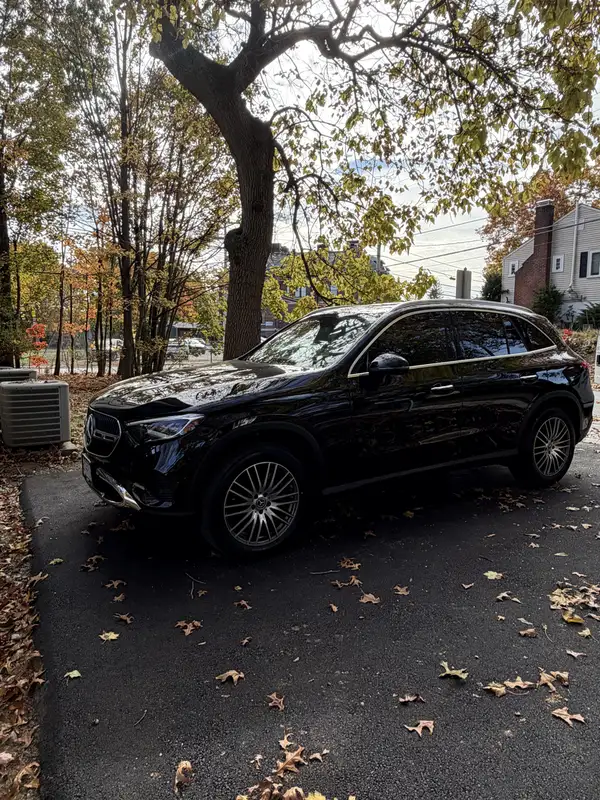
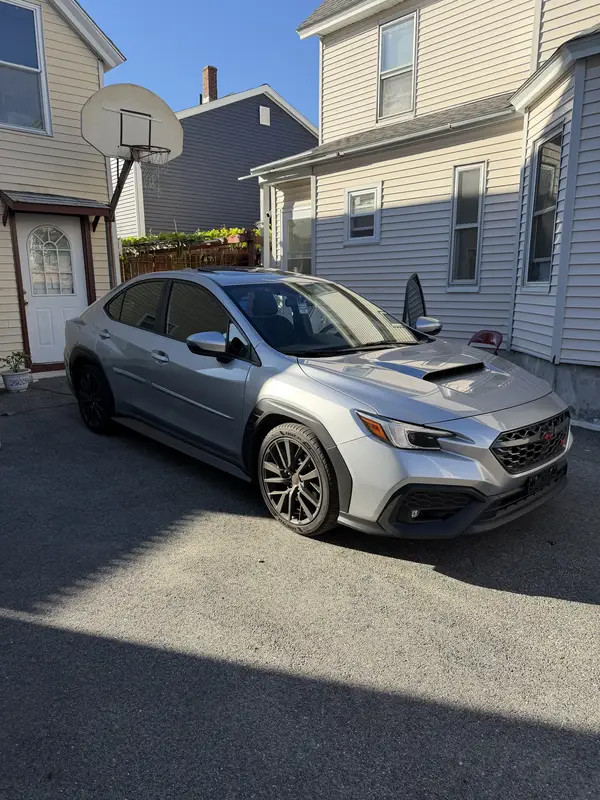
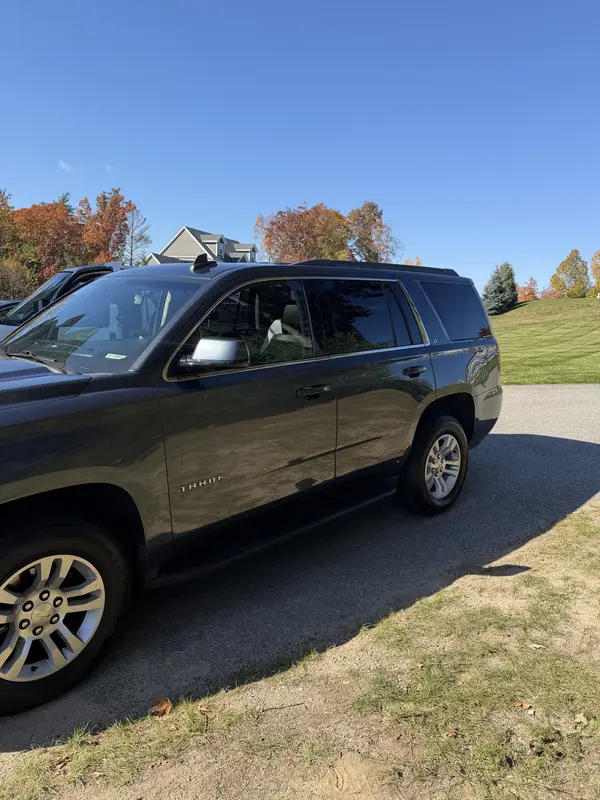
Many people move to Massachusetts from states where the back half of an SUV can be any shade. Here it cannot. The 35% rule applies to every vehicle type. Factory privacy glass is fine as it came from the factory, but adding limo film over it will put the windows far below 35%. Check the “Factory privacy glass” option in the calculator to see the effect.
Legal Tint Can Still Feel Dark and Cool
Darkness and heat rejection are not the same thing. Ceramic film blocks infrared heat and up to 99% of UV without needing to be dark, so a legal ceramic tint usually keeps your car cooler than an illegal 5% dyed film, with better night visibility. Compare films on our mobile window tinting page or visit our Quincy window tint shop.
Already Have Illegal or Failing Tint?
If your car failed inspection or your tint has turned purple and bubbly, we offer same-day window tint removal, mobile or in-shop, and can re-tint with a legal film in the same visit. Learn why tint turns purple.
Call or Text (617) 758-8148 See Window Tint Options
Massachusetts Tint Law FAQ
Is 35% tint legal in Massachusetts?
Yes. Massachusetts law allows window film with at least 35% visible light transmission (VLT) and no more than 35% reflectance on the front side windows, rear side windows and rear window. Because film goes on top of factory glass, a 35% film usually meters a few points lower, so ask your installer what the finished window will read.
Is 20% tint legal in Massachusetts?
No. 20% film is darker than the 35% minimum, so it is not legal on any side or rear window of a passenger vehicle in Massachusetts unless you have an RMV tinted glass waiver.
Can SUVs and trucks have darker rear windows in Massachusetts?
Not with aftermarket film. Unlike many states, Massachusetts uses the same 35% rule for cars, SUVs, trucks and vans. Factory privacy glass that came from the manufacturer is allowed, but adding dark film on top of it is not.
Why did my 35% tint fail inspection or read 30% on a meter?
Meters read the glass and film together. Most factory side glass lets through about 70 to 85% of light, so a 35% film on 80% glass measures about 28%. Use the calculator above to see your likely reading before you choose a shade.
Does factory privacy glass count against the tint law?
Factory privacy glass that meets federal standards is legal as it comes from the manufacturer. The problem starts when film is added over it, because the combined reading drops far below 35%.
Do I need two side mirrors if my rear window is tinted?
Yes. Massachusetts only allows film on the rear window if the vehicle has two outside mirrors, one on each side, adjusted so the driver can see the road behind.
Can I get a medical exemption for darker tint in Massachusetts?
Yes. The RMV issues tinted glass waivers for drivers who are photophobic or photosensitive. The application must be signed by a medical doctor and is reviewed by the RMV Medical Advisory Board.
What tint shade do you recommend in Massachusetts?
For most drivers we recommend a ceramic film in a legal shade. Ceramic film blocks infrared heat and UV without needing to be dark, so a legal ceramic tint often keeps a car cooler than an illegal dark dyed film.
What if my car already has illegal tint?
We remove old or illegal tint the same day in many cases, mobile or at our Quincy tint shop, and can install a legal ceramic film in the same visit.