
If you’re looking into protecting your vehicle’s paint, you’ve probably come across two popular options: ceramic coating and paint protection film (PPF).
They’re often mentioned together, and while both are designed to protect your vehicle, they serve very different purposes.
Understanding the difference can help you make the right decision based on how you drive, where you drive, and what kind of protection you actually need.
What Is Ceramic Coating?
Ceramic coating is a liquid polymer that is applied to your vehicle’s exterior. Once cured, it bonds with the paint and creates a thin, protective layer.
Its main benefits include:
-
Strong resistance to dirt, water, and contaminants
-
A deep, glossy finish that enhances your paint
-
Easier cleaning and maintenance
-
Protection against UV rays and oxidation
Ceramic coating does not add thickness to your vehicle. It’s designed more for surface protection and long-term maintenance than physical impact resistance.
What Is Paint Protection Film (PPF)?
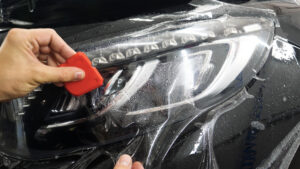
Paint protection film is a clear, durable layer of urethane that is physically applied to the surface of your vehicle.
It is significantly thicker than ceramic coating and is designed to absorb impact.
Its main benefits include:
-
Protection against rock chips, scratches, and road debris
-
Self-healing properties (light scratches can disappear with heat)
-
Long-term durability in high-impact areas
-
Nearly invisible finish when installed properly
PPF acts as a physical barrier, making it ideal for areas of your vehicle that take the most wear.
Key Differences Between Ceramic Coating and PPF
Level of Protection
PPF provides stronger protection against physical damage like rock chips and scratches.
Ceramic coating protects against environmental damage like dirt, water, and UV exposure.
Appearance
Ceramic coating enhances gloss and depth, giving your vehicle a more polished look.
PPF is more about protection and typically has a subtle or satin appearance depending on the finish.
Thickness
PPF is a thick, physical layer that can absorb impact.
Ceramic coating is a thin, bonded layer that does not prevent chips or deeper scratches.
Maintenance
Ceramic coating makes your vehicle easier to wash and helps it stay cleaner longer.
PPF still requires maintenance, but it protects the surface underneath from damage.
Cost
PPF is generally more expensive due to materials and installation.
Ceramic coating is more affordable and still provides long-term value.
Which Is Better for Massachusetts Drivers?
The answer depends on how your vehicle is used.
If you do a lot of highway driving, especially in the winter, your vehicle is more exposed to:
-
Road salt
-
Sand and debris
-
Rock chips
In those cases, PPF can be a strong option, especially for high-impact areas like the front bumper, hood, and side mirrors.
For most daily drivers, ceramic coating is often the more practical choice. It protects against the conditions your vehicle sees every day in Massachusetts—moisture, dirt, salt, and changing weather—while also making maintenance easier.
Can You Combine Ceramic Coating and PPF?
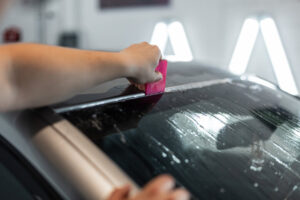
Yes, and in many cases, this is the best approach.
PPF can be applied to high-impact areas for physical protection, while ceramic coating can be applied over the rest of the vehicle (and even over the film itself).
This combination gives you:
-
Impact protection where it matters most
-
Easier cleaning and added gloss across the entire vehicle
-
A more complete level of protection overall
Final Thoughts
Ceramic coating and PPF are not competing services—they solve different problems.
If your priority is keeping your vehicle clean, glossy, and easier to maintain, ceramic coating is the right choice.
If your concern is preventing rock chips and physical damage, PPF offers a level of protection that coating alone cannot.
For many drivers, the right answer is a combination of both, tailored to how the vehicle is used.