
Most vehicle owners think about paint protection for the exterior — and for good reason. But the interior of your vehicle takes just as much daily punishment as the outside, if not more. Every time you get in and out, set down a coffee cup, let a passenger’s bag drag across the seat, or park in the sun on a summer afternoon, your interior is absorbing wear, UV exposure, and contamination.
Interior ceramic coating applies the same protective chemistry that has transformed exterior paint care to the surfaces inside your vehicle — seats, dashboard, door panels, carpets, and more. It’s one of the most underutilized services in professional detailing, and for owners who spend significant time in their vehicles, it’s one of the most impactful.
What Interior Ceramic Coating Actually Is
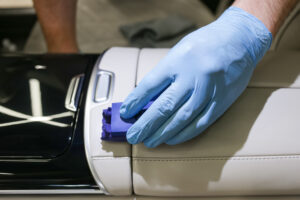
Interior ceramic coating is not the same product as exterior paint ceramic coating, though the underlying chemistry shares common principles. Interior formulations are specifically developed for porous and semi-porous surfaces — leather, vinyl, fabric, alcantara, plastic trim, and carpet — rather than hard, non-porous painted surfaces.
The coating penetrates into or bonds to the surface it’s applied to, creating a protective layer that repels liquids, resists staining, blocks UV degradation, and makes ongoing cleaning significantly easier. Different formulations are used for different surface types — a leather coating, for example, is a different product than a fabric or carpet coating — but the protective outcome is consistent: surfaces that are harder to stain, easier to clean, and better preserved over time.
What Interior Ceramic Coating Protects Against
Liquid Spills and Staining This is the most immediately practical benefit. Interior ceramic coating creates a hydrophobic barrier on treated surfaces. When liquid hits a coated seat or carpet, it beads up rather than absorbing into the material. This gives you time to wipe it away before it soaks in and sets as a stain. Coffee, soda, water, juice — liquids that would ordinarily begin staining fabric or leather within seconds sit on the surface long enough to be addressed.
For families with children, rideshare drivers, or anyone who eats or drinks in their vehicle regularly, this benefit alone justifies the service.
UV Protection and Fading UV radiation doesn’t stop at your windshield. Dashboard cracking, seat fading, and the gradual bleaching of interior plastics and leather are all caused primarily by UV exposure. A vehicle parked in the sun regularly will show interior UV damage within a few years without protection — color shifts in leather, brittle dashboard surfaces, faded door panel inserts.
Interior ceramic coating provides a UV barrier across treated surfaces, significantly slowing the degradation process. Leather stays supple and true to color. Plastics retain their original finish. Dashboards maintain their texture and appearance rather than developing the cracked, chalky look that characterizes neglected interiors.
Wear and Abrasion Resistance High-contact surfaces — seat bolsters, steering wheel leather, door pull areas — experience concentrated wear from repeated contact. Interior coatings add a layer of surface hardness that reduces the rate at which this wear accumulates. The coating takes the abrasion rather than the underlying material, preserving the appearance and integrity of surfaces that would otherwise show wear relatively quickly.
Antimicrobial Properties Many interior ceramic coating formulations include antimicrobial properties that inhibit the growth of bacteria, mold, and mildew on treated surfaces. In a vehicle interior — a warm, enclosed space where spills happen and moisture can accumulate — this is a meaningful benefit. It contributes to a cleaner, healthier interior environment and reduces odor development over time.
Ease of Cleaning Like exterior ceramic coating, the interior version dramatically simplifies maintenance. Dirt, dust, and surface contamination don’t bond as readily to coated surfaces. Regular cleaning becomes faster and requires less product. Stains that do set are easier to lift because the coating prevents deep penetration into the material.
Surfaces That Can Be Coated
Interior ceramic coating can be applied to virtually every surface inside the vehicle, with formulations matched to each material type.
Leather Seats and Trim Leather is one of the most popular interior coating applications. Natural and synthetic leather is porous, susceptible to staining from dye
The Benefits in Practice
Dramatically Easier Cleaning This is the benefit most owners notice first and most consistently. Coated interior surfaces clean faster and more thoroughly with less effort. Spills wipe away rather than requiring scrubbing. Fingerprints on touchscreens and trim release with a light pass rather than requiring repeated attention. Leather wipes clean rather than absorbing and holding grime. For anyone who spends significant time in their vehicle and values a clean interior, this alone justifies the investment.
Stain Resistance The hydrophobic properties of interior ceramic coating give fabric and leather surfaces meaningful resistance against staining. Liquids that would immediately soak into unprotected fabric bead on the surface of coated fabric, giving you time to respond. On leather, the coating prevents liquids from penetrating and reduces the risk of permanent staining from acidic substances.
UV Protection and Longevity Protecting interior surfaces from UV degradation extends their life significantly. Leather that would crack and fade within a few years of unprotected UV exposure maintains its suppleness and color depth considerably longer. Dashboard plastic that would begin showing fading and surface degradation within a few years retains its appearance. Interior ceramic coating is an investment in the long-term condition of your vehicle’s interior.
Preservation of Resale Value A vehicle’s interior condition is one of the primary factors buyers evaluate. A well-maintained interior with no staining, cracking, or fading commands significantly more in a private sale or trade-in than one showing the typical signs of interior wear. Interior ceramic coating is a practical investment in the resale value of the vehicle as well as in the daily ownership experience.
The Application Process
Interior ceramic coating application requires thorough preparation and careful technique. The process differs from exterior coating in that it involves multiple different surfaces and materials, each requiring appropriate product selection and application method.
Deep Interior Clean Before any coating is applied, the interior must be comprehensively cleaned. This means more than a basic vacuum and wipe-down. Leather is cleaned with a pH-balanced leather cleaner to remove embedded oils and surface contamination. Fabric is cleaned and extracted to remove any existing stains or soiling. Plastic and trim surfaces are cleaned to remove all grease, fingerprints, and residue. Any contamination left on a surface before coating is applied will be sealed beneath the coating.
Surface Inspection After cleaning, surfaces are inspected to identify any existing damage — cracks in leather, stains in fabric, scratches in trim — that should be addressed before coating. Existing damage can be reduced or repaired in many cases, but coating does not hide damage any more than exterior ceramic coating hides paint defects. Honest assessment before application sets accurate expectations.
Coating Application Interior ceramic coatings are applied surface by surface using appropriate applicators for each material type. Leather requires a different application technique than plastic trim, which requires a different approach than fabric. Product is worked into the surface and allowed to bond before any excess is removed. Application requires care to avoid coating unintended surfaces — particularly glass that will have a separate coating applied, and surfaces where coating buildup would be visible.
Cure Time Interior coatings require cure time before the vehicle is returned to normal use. During the initial cure period, surfaces should not be exposed to moisture or heavy contact. Full cure to maximum hardness and protection typically takes several days.
How Long Does Interior Ceramic Coating Last?
Interior ceramic coatings typically last one to three years depending on the product, the surfaces treated, and how the vehicle is maintained. High-contact surfaces like steering wheels and seat bolsters experience more wear on the coating than lower-contact areas like the dashboard, which affects longevity on those specific surfaces.
Maintenance matters. Cleaning coated interior surfaces with pH-neutral products and avoiding harsh chemical cleaners preserves the coating significantly longer. Aggressive cleaners degrade the coating prematurely, just as they would on exterior surfaces.
Periodic reapplication — typically every one to two years for high-contact areas — keeps protection consistent. Many owners incorporate interior coating reapplication into their regular detailing schedule.
Interior and Exterior: A Complete Protection Strategy
The most comprehensive approach to vehicle protection addresses both the exterior and interior together. Exterior ceramic coating and paint protection film protect the paint and body from environmental and physical damage. Interior ceramic coating protects the cabin from UV degradation, staining, and wear. Together, they represent a complete strategy for preserving the vehicle’s appearance and value across every surface.
At Massachusetts Mobile Detailing, we provide interior ceramic coating services throughout Massachusetts, coming directly to your location. Whether you’re protecting a new vehicle from day one or restoring and protecting an interior that has seen some wear, we assess the surfaces honestly, prepare them thoroughly, and apply protection that makes a genuine difference in how the interior looks, feels, and holds up over time.