
If you’ve ever climbed into a car that’s been sitting in the sun, you know how quickly the interior can become uncomfortable.
A windshield sunshade is one of the easiest ways to protect a parked vehicle from direct sunlight. Window tint is another popular option — but the two don’t work in exactly the same way.
So when comparing window tint vs. sunshades, which one actually does a better job protecting your car’s interior?
The answer depends on what you’re trying to protect against and when you want that protection.
Here’s what Massachusetts drivers should know.
How Does a Windshield Sunshade Work?
A windshield sunshade creates a physical barrier between incoming sunlight and the interior of your vehicle.
When placed against the windshield while the vehicle is parked, a reflective sunshade can help reduce the amount of direct solar energy reaching surfaces like your dashboard, steering wheel, and front seats.
It’s simple, inexpensive, and doesn’t require any permanent modification to your vehicle.
The downside?
It only works when you actually put it up.
Once you fold the sunshade away and start driving, that protection is gone.
How Does Window Tint Protect a Car Interior?
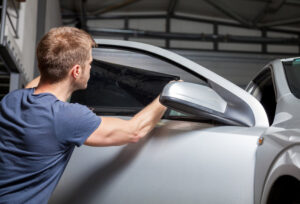
Automotive window tint works differently.
Window film is applied directly to the vehicle’s glass and remains in place whether you’re driving, parked at work, running errands, or sitting in traffic.
Depending on the specific film, automotive tint can offer features such as UV rejection, glare reduction, and solar-energy rejection.
That means window tint can provide ongoing protection rather than something you need to install and remove every time you park.
It also covers more than just the windshield area when appropriate film is installed on the vehicle’s other windows.
Window Tint vs. Sunshades for UV Protection
UV exposure is one factor that can contribute to fading and deterioration of vehicle interiors over time.
Seats, dashboards, trim, leather, upholstery, and other surfaces may all receive sunlight through automotive glass.
A windshield sunshade can provide a useful physical barrier while it’s covering the glass.
Automotive window films, on the other hand, may be specifically engineered to reject UV radiation and remain in place throughout the day.
And here’s something important: window tint doesn’t necessarily have to look extremely dark to provide UV protection.
The actual UV-rejection specifications of the film matter more than simply judging it by its shade.
Which Is Better for Keeping a Parked Car Cooler?
This is where the comparison becomes more interesting.
A reflective windshield sunshade can be useful for reducing direct solar energy entering through the large front windshield while your vehicle is parked.
Window tint can also reduce solar energy entering through treated glass, depending on the performance of the film.
However, neither option turns a parked vehicle into a climate-controlled space.
A car sitting outside in direct summer sunlight can still become hot.
For drivers focused heavily on parked-car comfort, using window film along with a quality windshield sunshade may provide a more comprehensive approach than treating them as an either/or decision.
Which Protects Your Dashboard Better?
If your primary concern is the dashboard, a windshield sunshade has an obvious advantage while the vehicle is parked: it physically covers the area where much of that direct sunlight enters.
But again, it only works when it’s being used.
Window film provides ongoing protection whenever sunlight is passing through treated glass.
If your car spends eight hours parked outside while you’re at work, consistently using a sunshade can be helpful. If you know you’re going to forget to put it up half the time, permanent window film requires considerably less effort.
What About Your Seats and Upholstery?
Sunlight doesn’t only enter through your windshield.
Your side and rear windows can expose seats, door panels, upholstery, and other interior surfaces to sunlight as well.
A standard windshield sunshade doesn’t address those windows.
Professionally installed automotive film can provide coverage across appropriate vehicle windows, giving you a broader approach to protecting the cabin.
This can be especially appealing for vehicles with leather interiors or drivers who want to preserve their vehicle’s appearance over the long term.
Do You Still Need a Sunshade If You Have Window Tint?
You can absolutely use both.
Having tinted windows doesn’t mean a windshield sunshade suddenly becomes useless.
If your vehicle is going to sit outside for hours on a hot, sunny day, putting up a reflective sunshade can provide another barrier against direct sunlight entering through the windshield.
Think of them as two different tools.
Window tint provides ongoing protection with no daily setup required. A sunshade provides additional temporary coverage when the vehicle is parked.
For some drivers, the best solution isn’t choosing one. It’s combining them.
Is Darker Window Tint Better for Interior Protection?
Not automatically.
A very dark film may look like it should provide dramatically better protection, but appearance doesn’t tell you everything about how window film performs.
Different films can have different UV- and solar-rejection properties even when their visible shades aren’t the same.
That’s why it’s important to look at the actual specifications of the film rather than choosing tint solely based on how dark it appears.
This is particularly useful for Massachusetts drivers who want interior protection without unnecessarily choosing an extremely dark tint.
What About Massachusetts Winters?
Interior sun protection isn’t only something to think about in July.
UV exposure can occur throughout the year, even when temperatures outside are cold.
Massachusetts winters also bring their own considerations. With snow on the ground, sunlight can reflect off bright surfaces and create additional glare while driving.
A windshield sunshade isn’t helping you once the car is moving.
Appropriately selected window film can continue providing its intended performance year-round.
Window Tint vs. Sunshades: Which Should You Choose?
If you want an inexpensive way to block direct sunlight through your windshield while your vehicle is parked, a good sunshade is absolutely worth using.
If you want a solution that remains in place while you’re driving and parked, covers multiple appropriate windows, and can provide benefits such as UV rejection and glare reduction depending on the film, professional window tint offers a more permanent option.
And if protecting your vehicle’s interior is a major priority?
You don’t necessarily have to choose.
Professional window tint plus a windshield sunshade when you’re parked for long periods can give you the benefits of both.
Protect Your Vehicle With Professional Window Tinting in Massachusetts
Your vehicle’s interior deals with sunlight throughout the year — not only during the hottest days of summer.
If you’re looking for a more permanent way to add UV rejection, reduce glare, and help protect your vehicle’s interior, Massachusetts Car Detailing offers professional window tinting for Massachusetts drivers.
Our team can help you compare window film options based on the appearance and performance you’re looking for rather than simply choosing the darkest tint available.
Prefer the convenience of having your tint installation come to you? Massachusetts Mobile Detail also offers professional mobile window tinting at qualifying locations.
Ready to protect your vehicle with professional window tint? Contact Massachusetts Car Detailing today to learn more and schedule your service.